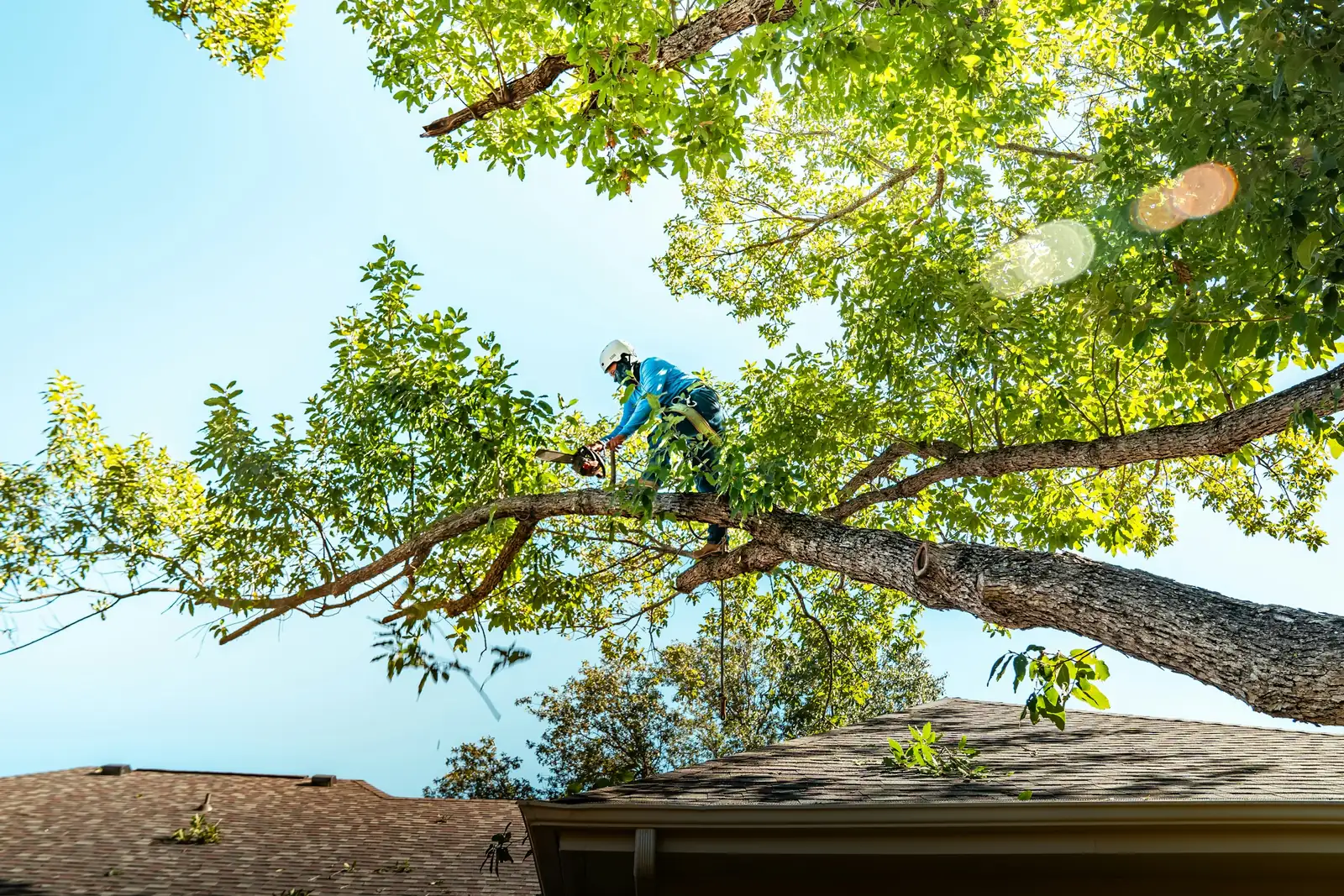
If you need commercial tree service in Columbus, GA, Foster's Tree Service works with schools, churches, HOAs, property managers, and businesses on the trees around parking lots, entrances, playgrounds, and common areas.
Commercial tree work comes with a different set of problems than a backyard job. People park under the trees, kids walk under them, and customers and members cannot be told to stay home for the day. The work has to fit around the hours your property is busy, and the site has to stay safe the whole time a crew is on it.
Foster's is a family business run by Billy Foster and his son, based in north Columbus not far from Columbus Park Crossing, and we are open 24/7.

What Our Columbus Commercial Tree Service Includes
Most commercial calls fall into a few kinds of work, and many properties need some of each over a year.
- Removing broken and hanging limbs over parking lots, walks, and play areas
- Trimming for clearance over drive lanes, signs, light poles, and roofs
- Removing dead, declining, and storm-damaged trees on the grounds
- Storm damage cleanup across lots, campuses, and common areas
- Scheduling work for evenings, weekends, or days the property is closed
- Coning off work zones and keeping people out from under the work
- Hauling the debris away, or leaving firewood stacked if you want it
Trees growing into utility lines on your property follow their own set of rules. See tree trimming near power lines for how that work is handled.
Signs Your Property Needs Tree Work
A limb is hung up in the canopy
A broken limb caught in other branches can drop without warning, often right over the parking spaces people use every day.
Dead wood over parking or walks
Bare, barkless limbs in a canopy over cars or a sidewalk are the kind of thing a quick look in winter makes easy to spot.
Bradford pears in the islands
Purdue University notes that Bradford pears have numerous crowded, narrow branch angles and that their branches are likely to break in storms.
Low limbs over drive lanes
Branches that brush buses, church vans, delivery trucks, or a light pole get torn and scraped every week.
A tree leaning toward a building
A new lean, cracked soil at the base, or roots lifting on one side means it needs a closer look.
After a storm, before people arrive
Broken limbs and debris in the lot need to be handled before Monday school traffic or Sunday services.
How We Handle Commercial Tree Work
Scheduling is usually the hardest part of commercial tree work, and the Hallie Turner Private School job shows why. The hung-up limb sat over the rear of a parking lot the school uses every weekday, so the work went on the calendar for Saturday evening, when nobody needed to park there.
- Walk the property with your contact. We look at the trees with whoever manages the site, whether that is a principal, pastor, board member, or property manager.
- Write up the work by priority. Hazards over people and cars come first. Clearance and cleanup can be scheduled after.
- Schedule around your people. We plan for the hours your lot is emptiest, including evenings and weekends.
- Set up a safe work zone. Cones go out, the parking rows or walks under the work get closed, and nobody stands in the drop zone.
- Work, clean up, and reopen. We rake and blow off the lot, haul the wood or stack it, and hand the area back clean.
Scheduling Options for Commercial Properties
| Option | Best For | What to Expect |
|---|---|---|
| One-time project | A single hazard, removal, or trimming job | One walk-through, a written scope, and the work done on a date you pick. |
| Off-hours work | Schools, churches, and busy retail lots | The crew works while the lot is empty, such as a Saturday or before opening. |
| Pre-season walk-through | HOAs and campuses with many trees | A look at dead wood and weak limbs before storm season, with a priority list. |
| Storm call | Damage after severe weather | Emergency services 24/7. Make the site safe first, then clean up the grounds. |
What Affects the Cost of Commercial Tree Work
- Number and spread of trees. Ten trees on one lot cost less to reach than ten trees spread across a campus.
- What is underneath. Parked cars, roofs, and play equipment mean more rigging and lowering, and less dropping.
- Closing off the site. How many rows or walks have to be coned off, and for how long, affects crew time.
- Timing. Evening, weekend, or tightly windowed work takes more planning than an open weekday.
- Access. Curbed islands, fences, and planted beds can limit where trucks and equipment can go.
- Debris handling. Hauling everything, chipping on site, or leaving firewood all change the job.
Commercial Properties Around Columbus
Columbus has a lot of big, old trees on institutional ground. Church lots in Wynnton and Midtown sit under mature oaks and pecans. School campuses and HOA common areas in north Columbus often keep the tall loblolly pines left standing when the land was developed. If your lot has Bradford pears in the islands, plan on watching them closely.
Storms are the main pressure on commercial trees here. According to NOAA, the Atlantic hurricane season runs June 1 through November 30. Remnants of Gulf storms can push wind and heavy rain inland to west-central Georgia. Spring brings its own risk: the National Weather Service found that an EF0 tornado with 85 mph peak winds crossed from Phenix City into Columbus on April 14, 2019, damaging a gas station awning and pulling metal panels off a warehouse off Cusseta Road.