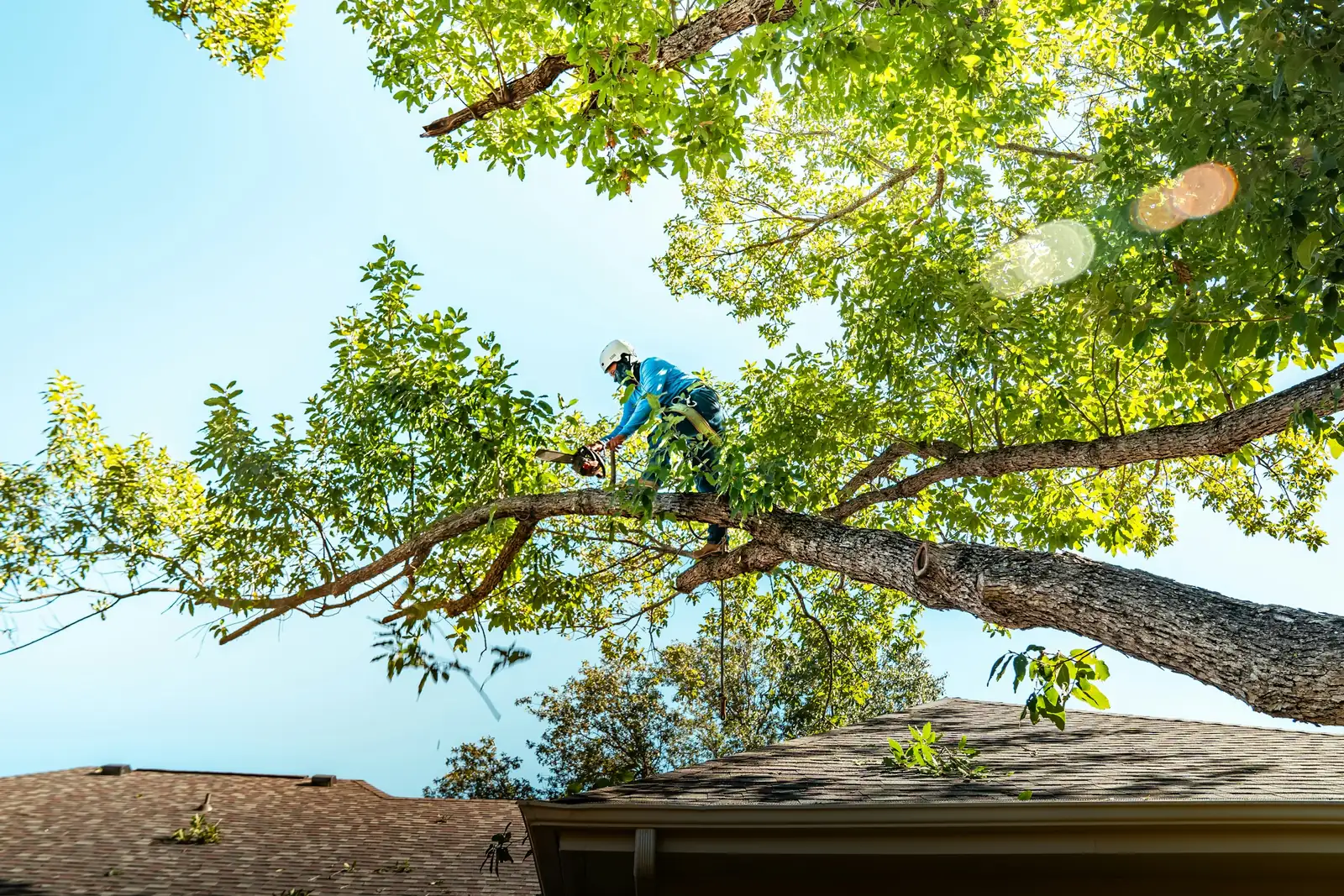
If you need tree on house removal in Columbus, GA, get everyone out of the rooms under the tree first, then call Foster's Tree Service at (706) 430-2269. We are open 24/7, so call any time, day or night.
A tree on a roof is a heavy, loaded object resting on something that was never built to hold it. How it comes off decides whether you end up with a hole to patch or a much bigger repair. We rig it down in pieces, then tarp the opening so rain stays out.
If the tree is still standing but leaning hard toward the house, call about emergency tree removal before it lands.

What Our Columbus Tree on House Removal Includes
- A look at the roof, walls, and attic from a safe spot before any cutting starts
- Waiting on Georgia Power if the service line or a utility line is involved
- Tying off sections of the tree with ropes and rigging before each cut
- Lowering pieces to the ground under control, not rolling them across the roof
- Clearing branches and needles out of gutters, valleys, and the yard
- Emergency roof tarping over any opening once the tree is off
- Hauling the wood and brush away, or stacking rounds if you want them
We remove the tree and cover the hole. Permanent roof, gutter, and framing repairs are work for your roofer or builder, and we leave the roof clear so they can get started.
Signs a Tree on Your House Needs a Crew Now
A limb through the roof
If you can see wood or daylight from the attic, water is next. The opening needs to be cleared and covered before the next shower.
A stain or sag in the ceiling
A spreading stain or a bulge means the tree has broken the roof somewhere above it. Stay out from under that spot.
Trunk resting on the eave
It can look minor, but the full weight of the tree may be bearing on a gutter board and rafter tails that were never meant to carry it.
Service line torn down
Georgia Power notes that most outages happen when trees and limbs break and fall and tear power lines down with them. Treat any wire on the house or ground as live.
Creaking or shifting
New cracks in drywall, doors that suddenly stick, or popping sounds mean the load is still moving. Leave the house and call.
How We Rig a Tree Off a Roof
- Read the load before cutting. We figure out where the weight sits and which way it is pushing. The OSHA tree trimming guidance for storm work says that when a tree is broken and under pressure, you need to know which way the pressure is going before you cut.
- Clear the drop zone. People stay out of the rooms below and out of the yard where pieces will land. OSHA's same guidance keeps non-essential workers at least 20 feet beyond expected drop zones.
- Take the crown off first. Smaller limbs come off from the outside in, which lightens the load on the roof gradually instead of all at once.
- Tie off and lower the heavy pieces. Big limbs and trunk sections are roped to an anchor above, cut, and let down slowly to the ground.
- Clear and cover. We sweep debris off the roof and put on an emergency roof tarp over any opening.
- Haul and rake. The wood leaves with us or gets stacked, and the yard is raked clean.
Ways to Get a Tree Off a House
| Option | Best For | What to Expect |
|---|---|---|
| Rigged sectional removal | Trunks and big limbs on the roof or wedged into rafters | Each piece tied off, cut, and lowered by rope. Slower, with the least added damage. |
| Cut and drop from the ground | Smaller limbs resting on a low eave or porch roof with open ground below | Quick cuts with pieces falling into a cleared area. Not used if anything below could be hit. |
| Make safe now, finish later | Night calls, lightning, or lines still down | Weight taken off the worst spot and the opening covered. Full removal in daylight. |
What Affects the Cost of Removing a Tree from a House
- How much tree is on the roof. A single limb is a different job from a whole oak lying across the ridge.
- Where the weight sits. Wood wedged into broken rafters takes more careful cutting than wood resting on the shingles.
- Roof height and pitch. Two-story homes and steep roofs take more rigging and more time.
- Rigging anchors and access. Close neighbors, fences, and pools limit where pieces can be lowered.
- Power lines. Waiting on Georgia Power can split the work into more than one visit.
- Tarping and hauling. Covering the opening and removing all the wood are part of the total.
Columbus Houses and the Big Trees Next to Them
Columbus's older in-town neighborhoods are where big trees and houses sit closest together. In Wynnton, Dinglewood, Lakebottom, and Midtown, mature water oaks, laurel oaks, and pecans grow close to older homes, on narrow lots with service lines overhead. Water and laurel oaks are short-lived as oaks go, and rot can hide behind sound-looking bark until the day a limb gives way over the roof.
In north Columbus, the risk is tall loblolly pines left standing when subdivisions went in, many of them a single tree length from the house. Whether it is a pecan on an older cottage in Wynnton or a pine on a two-story home near Williams Road, there is rarely open ground to drop wood into. That is why we rig instead of drop, and why tight-space tree removal skills come into play on almost every house job.