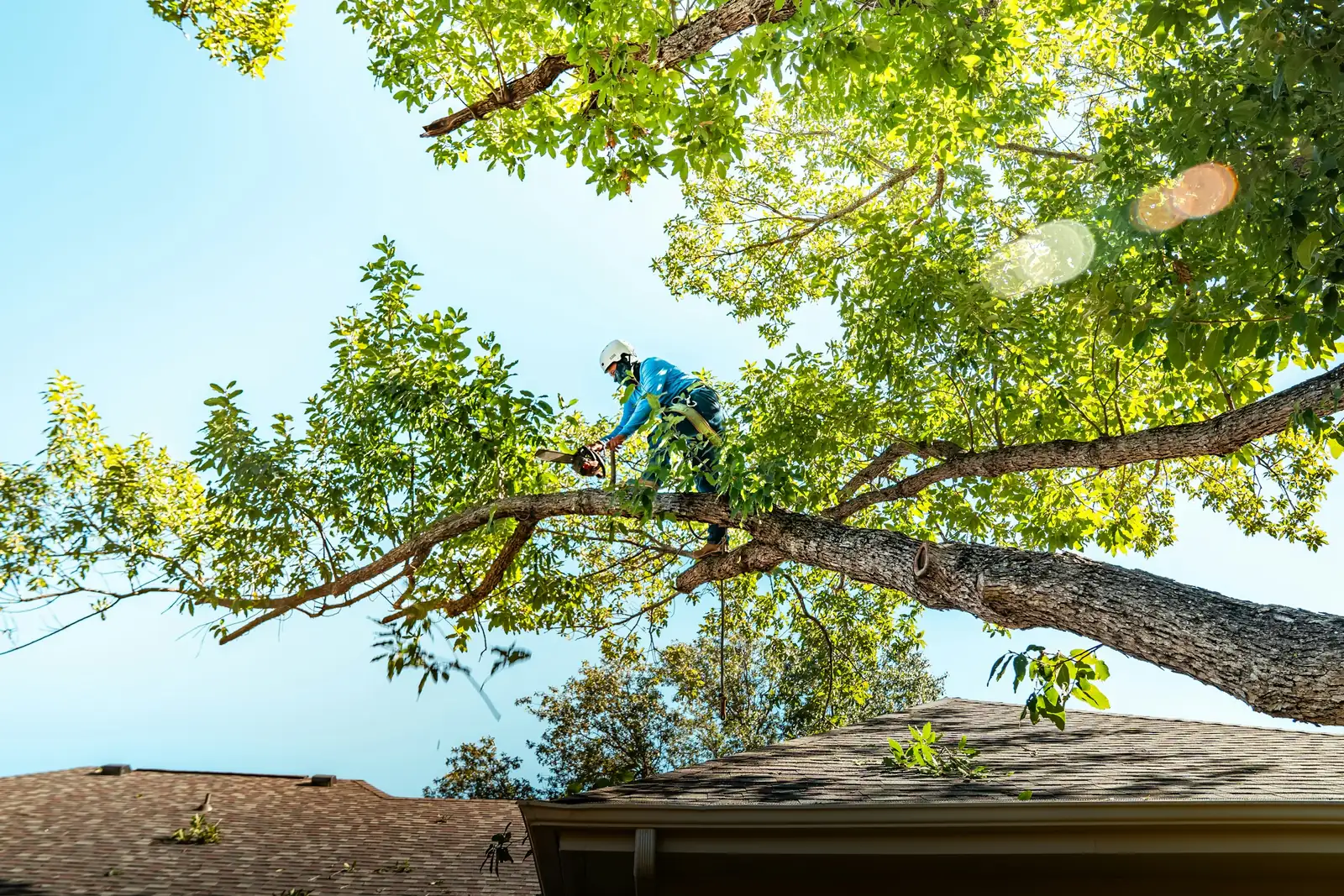
If you need stump removal in Columbus, GA, and grinding will not cut it, Foster's Tree Service digs out the stump and its main root ball so the ground is ready for footings, a patio, or a new tree in the same spot.
Most stumps only need grinding. Full removal is a bigger job, with more digging, a bigger hole, and backfill that has to be packed so it does not sink later. If the stump is just in the way of the mower, stump grinding is faster and leaves less of a mess. We will tell you plainly which one your project needs.
Removal makes sense when something has to be built or planted right where the tree stood. If the tree is still standing, start with tree removal. If it already blew over and the root ball is half out of the ground, our fallen tree removal crew can deal with the trunk and the exposed roots together.

What Full Stump Removal in Columbus Includes
Grinding chews the stump into chips and leaves the roots below to rot. Removal takes out the solid wood: the stump, the root ball under it, and the larger roots in your work area.
- Digging around the stump to expose the main anchor roots
- Cutting those roots and lifting the root ball out of the ground
- Removing larger roots inside the area you plan to build or plant
- Hauling the stump, roots, and clumps of soil off your property
- Backfilling the hole in layers and packing each one down
- Raking out the area and cleaning dirt off drives and walks
How big is a root ball? The Georgia Forestry Commission's guide to tree roots uses a rule of thumb of about half a foot of root plate radius for every inch of trunk diameter. By that math, a tree 12 inches across has a root plate roughly 12 feet wide. We do not dig out all of it, but it explains why a removal leaves a bigger hole than people picture.
When You Need Stump Removal Instead of Grinding
A patio or addition is going there
Pavers, slabs, and footings need solid ground. Root wood left behind rots over time, and the soil above it can settle.
You want a tree in the same hole
A new tree's roots need soil, not a mat of chips and old roots. Removal and clean fill give it a real start.
A fence line runs through it
New posts have to go where the old stump sits. A grind leaves chips and root wood right where a post hole needs firm soil.
You are regrading the yard
Drainage work, a new driveway, or leveling a slope means moving soil, and the root ball has to come out first.
Roots are pushing on hardscape
Big roots against a retaining wall or walk can be cut and pulled out with the stump while the area is open.
Our Stump Removal Process
- Get the lines marked. Before anyone digs, buried utilities need to be located. Georgia 811 wants a locate request in at least 3 business days ahead of any digging, and the service is free.
- Dig out around the stump. We open up the soil to find the anchor roots. Near marked lines we slow down and dig by hand.
- Cut and lift the root ball. Roots get cut cleanly, then the stump and root ball come up in one piece or a few.
- Clear the larger roots. We follow the big roots that cross your project area and take them out too.
- Backfill and pack. Soil goes back in layers, each packed down, with a slight mound on top for settling.
- Haul off and clean up. The stump and roots leave on our truck, and we rake and sweep before we go.
That hand digging is not optional. According to Georgia 811, Georgia's tolerance zone extends 18 inches on either side of a buried line, and digging inside it calls for hand digging or similar careful methods.
Stump Removal vs. Grinding Compared
| Option | Best For | What to Expect |
|---|---|---|
| Stump grinding | Lawns, mulch beds, planting a few feet away | Stump ground below grade, roots left to rot, a small hole filled with chips or topsoil. |
| Full stump removal | Patios, footings, fence lines, replanting in the same spot | Root ball dug out and hauled, a large hole backfilled and packed. |
| Leave it to rot | Out-of-the-way corners of a wooded lot | No work now, but years of a lump in the yard and possible sprouts. |
What Affects the Cost of Stump Removal
- Trunk diameter. Root plates grow with the trunk, so a wider stump means a much bigger dig.
- Root habit. Some trees spread wide and shallow, others anchor deeper, and that changes how much digging it takes.
- Soil. Heavy clay clings to roots and digs slowly, while sand digs easier but caves at the edges.
- Nearby structures and utilities. Hand digging near slabs, walls, and marked lines takes longer than open-yard work.
- Trees you are keeping. The Georgia Forestry Commission warns that cutting more than 30 percent of a tree's critical root zone can cause dieback or death, so digging near a healthy oak goes slower and tighter.
- Backfill and haul-off. How much soil has to come in and how much root wood has to go out both add to the job.
Stump Removal in Columbus Soil
Columbus straddles the fall line, and you feel it with a shovel. North of downtown, you are usually digging red Piedmont clay. To the south and east, the ground turns sandier. The Georgia Forestry Commission notes that in clay soils, most of the roots that anchor and water a tree lie in the top 12 to 14 inches, which is why root balls dug from clay tend to come up wide, flat, and heavy.
Location matters too. In Wynnton, Lakebottom, and Dinglewood, older homes sit on narrow lots with mature oaks and pecans close to driveways, walks, and overhead service lines, so removals there mean careful hand work near the house. In newer north Columbus subdivisions, the stumps are often loblolly pines left from development, and homeowners usually want them out to make room for a patio or a play area.