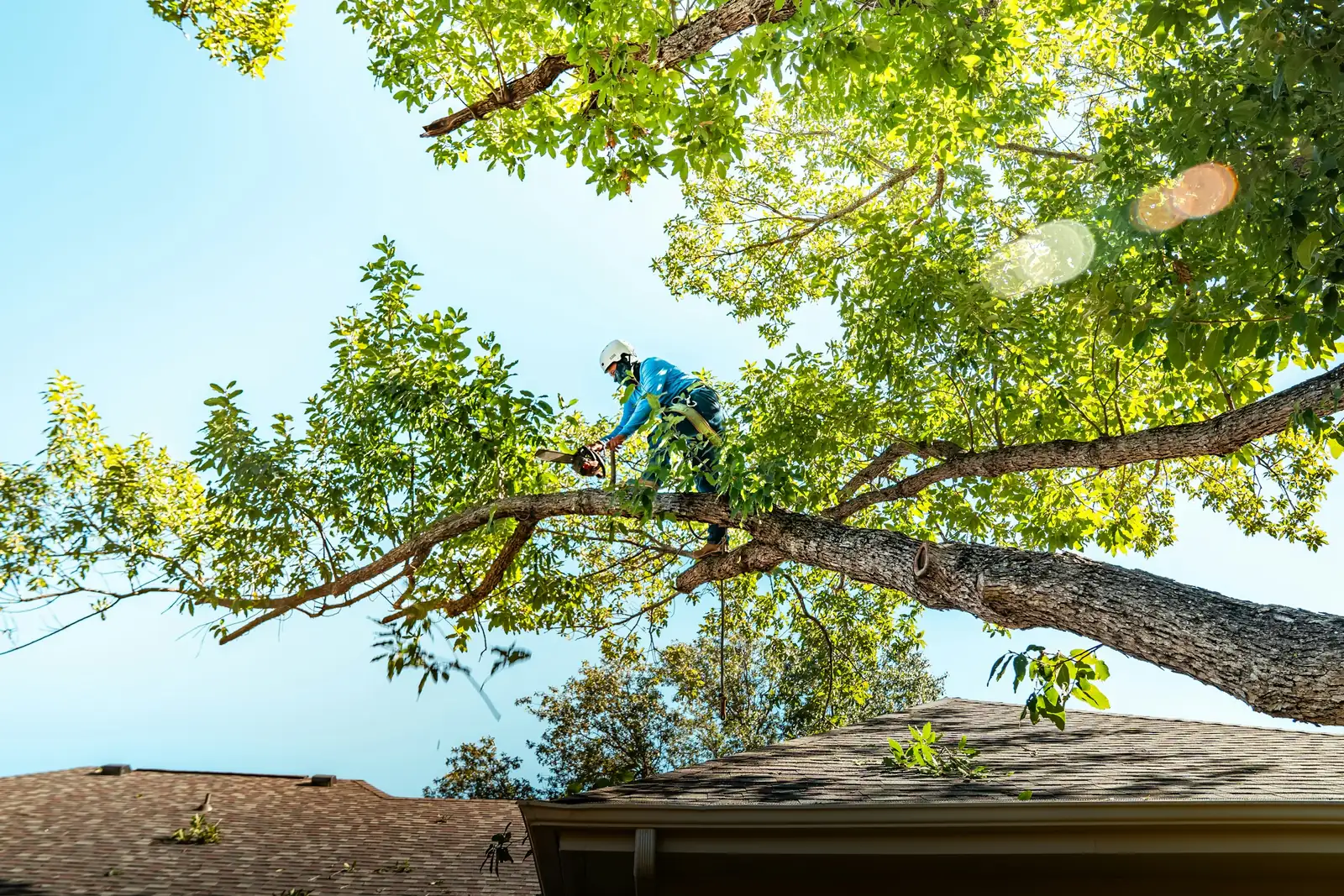
If you need dead tree removal in Columbus, GA, or you have a tree that just looks wrong, the time to deal with it is before the next windy afternoon. Dead and decaying trees do not pick a convenient day to fall.
This page covers trees that are dead, dying, or rotting inside: the warning signs, the local species that tend to go first, and why dead wood is trickier to cut than a healthy trunk.
If a tree is cracking or leaning toward the house right now, skip the reading. See our emergency tree removal page or call (706) 430-2269. We are open 24/7.

What Our Columbus Dead Tree Removal Includes
Taking down a dead or decaying tree is mostly about control. A standard job includes:
- A close look at the trunk, base, and crown for cracks, cavities, rot, and dead limbs
- A drop-zone plan that assumes the wood may break early
- Clearing loose dead limbs first so nothing falls mid-job
- Taking the tree down in sections, or felling it if nothing is in reach
- Hauling the wood and raking up the bark and crumbly wood dead trees shed
- A word on nearby trees that may share the same problem
Warning Signs of a Dead or Hazardous Tree
Mushrooms and conks
Fungus on the trunk or around the roots is a red flag. UGA Extension's "Is My Tree Dying?" calls these signs of severe or advanced rot in the trunk or root system.
Cavities and cracks
Open holes, long vertical cracks, or split seams mean the shell holding the tree up is thinner than it looks.
A lean that is new or growing
UGA Extension in Forsyth County says trees leaning 30 degrees or more with a target in their path of fall are hazardous. A lean that shows up suddenly needs a look right away.
A dead top
Bare branches high in the crown while the lower limbs still leaf out. Dieback like this can point to root failure, decay, or disease.
Bark falling away
Big patches of loose or missing bark, with bare gray wood underneath, usually mean that part of the tree is dead.
How We Take Down a Dead or Dying Tree
- Check the wood, not just the tree. We look at the trunk, base, and root flare for rot and judge how much solid wood is left where the cuts will go.
- Decide whether anyone climbs. A tree with heavy decay may not be safe to climb or to tie rigging into, and that changes the whole plan.
- Clear the deadwood first. Loose dead limbs come down before the big cuts, so nothing breaks free while the crew works below.
- Take it down in controlled pieces. Smaller cuts and a wider safety zone than a live tree would need, because brittle wood can snap before a cut is finished.
- Haul, rake, and check the neighbors. We clean up and look over nearby trees, since the same fungus or stress often hits more than one.
Remove, Brace, or Wait: Your Options Compared
Not every sick tree has to come down today. OSHA's logging guidance lists snags, meaning standing dead, broken, or rotted trees, as a hazard to be felled or kept clear of, and that is the right instinct for any dead tree that can reach a target. A declining tree with sound structure may have other options.
| Option | Best For | What to Expect |
|---|---|---|
| Remove now | Dead trees, root rot, conks at the base, or a fresh lean toward a target | A planned takedown in sections or by felling, with full cleanup. |
| Prune and brace | A sound tree with one weak union or a few dead limbs | Deadwood comes out and, where it fits, cabling and bracing supports the weak spot. |
| Inspect and watch | Early decline with no clear cause yet | A tree health inspection now and another look after the next growing season. |
What Affects the Cost of Dead Tree Removal
- How far the decay has gone. A tree that cannot be climbed or rigged safely needs a slower, more careful plan.
- What it could hit. A dead oak over the roof takes far more control than one at the back of the lot.
- Height and trunk size. Bigger trees mean more cuts and more wood to haul.
- Access. Gates, slopes, and soft ground change how the wood gets from the tree to the truck.
- How many trees are affected. Fungus and beetles often hit several trees, and doing them together can simplify the work.
- Timing. A planned removal on a dry day is simpler than an after-hours call once the tree has started to move.
Dying Oaks and Dead Pines in Columbus
In older Columbus neighborhoods like Wynnton and Lakebottom, a lot of the trees that turn hazardous are big water oaks and laurel oaks. They grow fast and shade a lot of in-town yards, but they are not long-lived. UF/IFAS Extension puts the water oak's life span at about 30 to 50 years and the laurel oak's at about 50 to 70, with rot a big part of the reason. A huge water oak beside an older Columbus house may be near the end of its run, even if it still leafs out every spring.
Dead pines are the other common case, especially in north Columbus, where drought, storms, and bark beetles can finish off stressed loblollies. Our pine tree removal page covers that in detail.