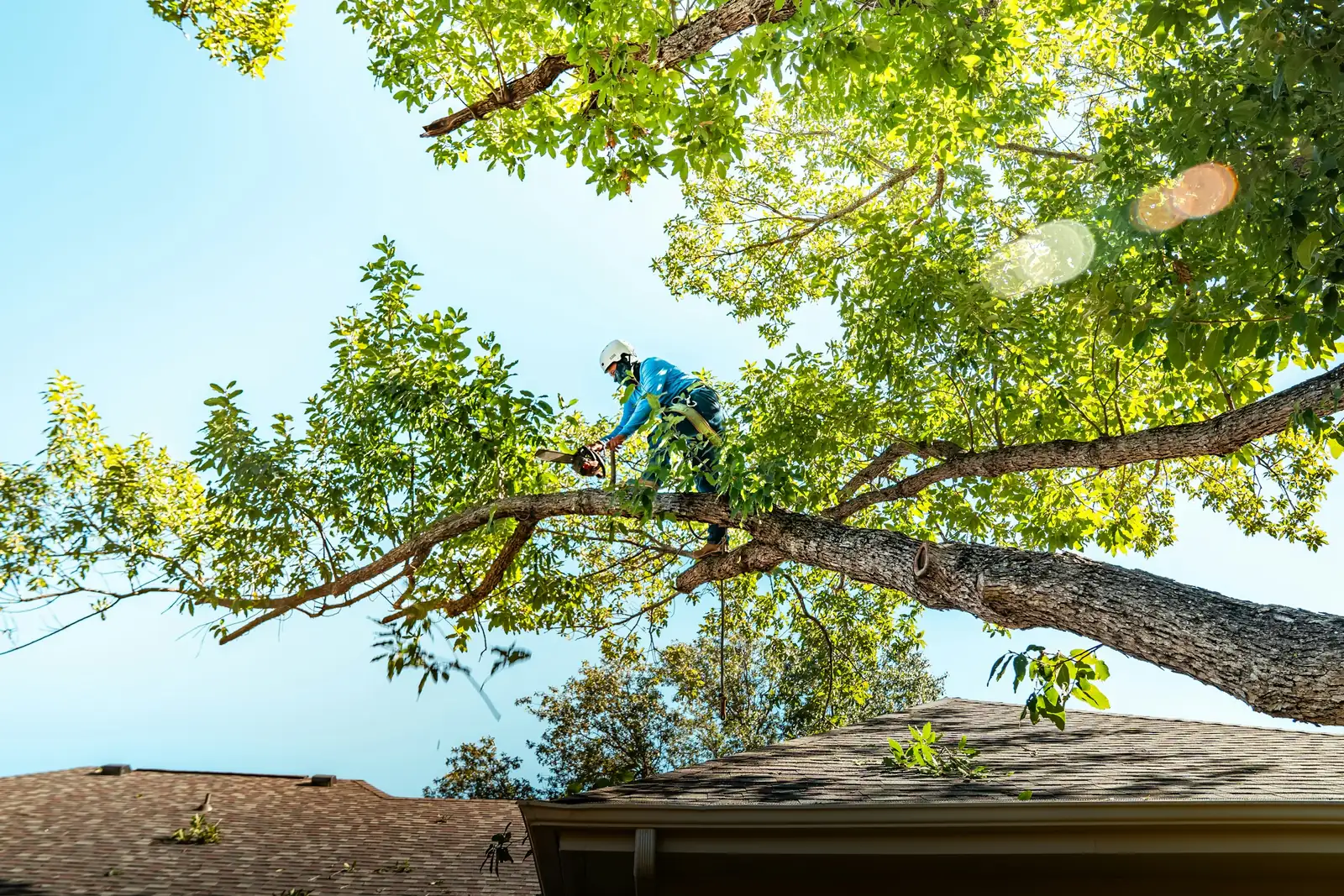
If you need emergency roof tarping in Columbus, GA because a tree or limb has broken through your roof, call Foster's Tree Service at (706) 430-2269, day or night.
With emergency services 24/7, we take the wood off the roof, clear the debris, and cover the opening with a secured tarp that keeps rain out until a roofer can make permanent repairs.
A tarp is temporary by design, but how it goes on still matters. Done right, it sheds water for weeks. Done wrong, it flaps loose in the first gust and funnels rain straight into the hole it was supposed to cover.

What Our Columbus Emergency Roof Tarping Includes
- Removing the tree or limb from the roof before anything else
- Sweeping branches, needles, and broken shingle pieces off the work area
- Sizing a heavy-duty tarp to cover the damage with generous overlap on every side
- Running the tarp up and over the ridge when the damage allows, so water sheds over it, not under it
- Fastening wood strips along the edges so wind cannot get underneath
- Pointing out other limbs hanging over the roof that could cause the next hole
It is the same basic method used on a much larger scale after hurricanes. According to FEMA, the Army Corps of Engineers' Blue Roof program uses reinforced plastic sheeting held down with strips of wood secured to the roof with nails or screws, rather than a loose tarp tied off at the corners.
Signs You Need an Emergency Roof Tarp
Daylight in the attic
If you can see sky through the decking, the next rain is coming straight in. Cover it before the forecast turns.
A spreading ceiling stain
Water travels along rafters before it shows, so the leak may be several feet from the stain. Either way, the roof above is open.
A limb stuck in the roof
Leave it for the crew. It may be plugging the hole for now, and it has to come out in a controlled way before any tarp can seal.
Torn shingles and exposed felt
A limb that slid off can scrape away shingles without punching through. Bare underlayment will not hold up to a Columbus downpour for long.
A soft or sagging section
A dip in the roofline means broken decking or rafters underneath. Stay off it and keep people out of the room below.
How We Tarp a Roof After Tree Damage
- Get the tree off first. No tarp seals around a trunk. We rig the wood down in pieces, as described on our tree on house removal page.
- Look from above and below. We check the opening from the roof and, when it is safe, from the attic, so the tarp covers all of the damage and not just the obvious hole.
- Clear the surface. Branches, needles, and loose shingle pieces come off so nothing under the tarp can puncture it or hold water.
- Lay it out with overlap. The tarp runs past the damage on every side and over the ridge when possible, so water flows across it and off the roof.
- Batten it down. Wood strips go along the edges and are fastened through the tarp into the roof, which keeps wind from getting a grip on it.
- Check inside and plan the repair. We look for new drips, then you call your roofer for the permanent fix while the tarp holds the line.
Roof Tarping Options Compared
| Option | Best For | What to Expect |
|---|---|---|
| Battened tarp | Punctures and torn shingles from limbs | Tarp run over the ridge with wood strips along the edges. Temporary until the roofer arrives. |
| Boards under the tarp | Larger holes or broken decking where a tarp alone would sag and pool water | The opening is bridged first so the tarp has something solid to lie on, then battened down. |
| Inside protection until it is safe | Lightning, high wind, or a roof too steep or slick to work on in the dark | Buckets, plastic, and moved belongings inside. The tarp goes on as soon as conditions allow. |
What Affects the Cost of Emergency Roof Tarping
- Size of the damaged area. A single puncture takes less material and time than a long gash across two roof planes.
- Roof pitch and height. Steep and two-story roofs take more setup to work on safely.
- Tree removal first. If a trunk or big limb is still on the roof, that work comes before the tarp.
- Number of openings. Several holes from one tree may need more than one tarp.
- Broken decking. Bridging a large hole before tarping adds material and labor.
While we are up there, we may point out other limbs that need overhanging branch trimming before they put another hole in the roof.
Columbus Rain and Why a Roof Hole Cannot Wait
Columbus gets well over 40 inches of rain a year, and it falls fairly steadily across every season, with March typically the wettest month. The National Weather Service in Peachtree City lists the city's normal annual rainfall at 46.75 inches. In 2020, Columbus got 69.09 inches, its fifth wettest year on record.
Those totals arrive in bursts. The same report shows 5.92 inches fell in Columbus on April 19, 2020, a record for any April day, and the remnants of Hurricane Sally dropped 3.72 inches on September 16. One day like that through an open roof soaks insulation, drywall, and flooring. If a storm left more than just a roof problem, our storm damage cleanup crew can handle the yard too.