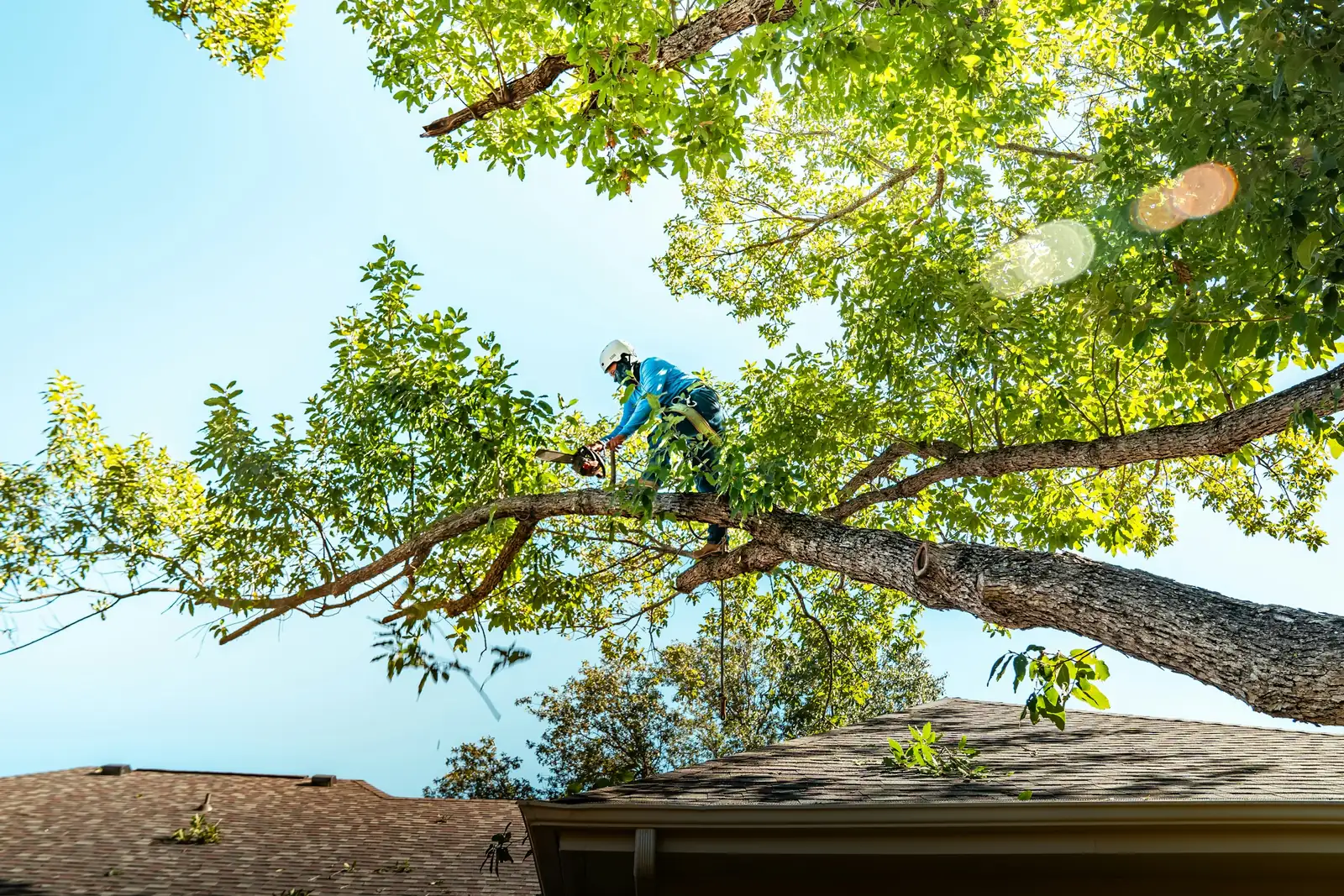
If you are looking into tree cabling and bracing in Columbus, GA, you probably have a tree you would hate to lose: a big oak with two trunks rising from a tight V, a fork that has started to crack, or a heavy limb stretched out over the house. Cabling and bracing add support to those weak spots so the tree is less likely to split apart in wind.
It is not the right fix for every tree. Billy Foster will look at yours and tell you plainly whether support makes sense, whether pruning alone would do the job, or whether the tree is past saving. If you are not sure what you are looking at, start with a tree health and hazard inspection.

What Our Columbus Tree Cabling and Bracing Includes
Support systems are covered by ANSI A300 Part 3, the industry standard for supplemental support. The Tree Care Industry Association describes that part as applying to the installation and maintenance of tree support systems, including cabling, bracing, and guying. A typical job includes:
- A close look at the weak spot. Checking the union and the wood around it for cracks, decay, and bark pinched into the fork.
- Load-reducing pruning. Taking weight off the ends of the supported limbs, so the cable is a backup and not the only thing holding the tree together.
- Cable installation. Connecting stems or limbs high in the crown so they move together instead of pulling apart.
- Brace rods where needed. Threaded rods through a split or weak union keep stems from spreading or twisting.
- A plan for checkups. A record of what went in and when it should be looked at again.
According to Purdue Extension, a traditional system uses extra-high-strength steel strand attached to bolts in the upper crown, while dynamic systems use synthetic rope attached without drilling. Both work by limiting how far a weak branch can move in a storm.
Signs a Tree May Need Cabling or Bracing
Two trunks in a tight V
Co-dominant stems of similar size competing from one point. The ISA's Recognizing Tree Risk guide notes these can often be failure points.
Bark pinched into the fork
When bark is trapped between two stems instead of wood joining them, the union is weaker than it looks.
A crack below the union
A vertical seam running down from the fork, sometimes with wet staining, means the stems have started to separate.
A long, heavy limb over a target
An overextended limb with most of its leaves out at the tip, reaching over a roof, driveway, or play set.
A tree that lost a leader
When one big stem breaks out in a storm, the ones left can suddenly carry loads they never grew to handle.
Our Cabling and Bracing Process
- Evaluate the whole tree. Billy looks at the union, the health of the crown, the roots, and what sits underneath. If there is serious decay, he says so before anyone talks about hardware.
- Prune first. Dead wood comes out and heavy ends are reduced, which lowers the load the support has to carry.
- Install the cable high. Placement matters. The TCIA notes that cables should sit about two-thirds of the way up, and that lower cables may mean a system is due for an update.
- Brace the union if needed. Rods go through a weak or split union to keep the stems from spreading or sliding against each other.
- Check it over the years. Purdue Extension recommends a ground inspection every year for loose hardware and a closer look from up in the tree about every three years.
Cabling, Bracing, Pruning, or Removal
| Option | Best For | What to Expect |
|---|---|---|
| Cabling | Healthy trees with a weak fork or an overextended limb | Limits movement high in the crown and needs periodic checks |
| Bracing, often with a cable | Split or spreading unions on co-dominant trunks | Rigid support lower in the tree that works best in sound wood |
| Reduction pruning alone | Limbs that can be made lighter instead of held up | No hardware, but the tree may need pruning again as it grows |
| Removal | Decayed unions, failing roots, or species prone to splitting | The risk is gone, along with the shade |
Not every tree is a candidate. Purdue's guide points out that some trees cannot be cabled or braced because of poor health or decayed wood. Bradford pears are the classic local example: UGA Extension notes their almost vertical branches split easily in storms and the trees often fail after 10 to 20 years. When removal is the safer call, our dead and hazardous tree removal service takes it from there.
What Affects the Cost of Cabling and Bracing
- Number of cables. A simple two-stem fork may need one cable, while a tree with three or four leaders can need several.
- Type of system. Steel hardware and synthetic dynamic systems differ in materials and installation time.
- Bracing rods. Drilling and setting rods through a split union adds work beyond the cable itself.
- Tree height and access. Cables go high in the crown, so tall trees and tight backyards mean more climbing and setup.
- Pruning at the same visit. Reducing weight before installing support is usually part of the job, and how much depends on the tree.
- Follow-up checks. Periodic inspections over the life of the system are separate, smaller visits.
Cabling Old Trees in Columbus
The trees people most want to save in Columbus tend to be the big ones. Mature water oaks, willow oaks, and live oaks shade homes in the Historic District, Peacock Woods, and Dinglewood, and many grew up with two or three trunks competing from one fork. Water oaks and laurel oaks are relatively short-lived and prone to internal decay as they age, so we check the wood at the union carefully before recommending hardware.
A sound, healthy live oak or willow oak shading the house is often a good candidate. A Bradford pear by the driveway or a hollowing water oak usually is not. Spring storm lines and the remnants of Gulf hurricanes test every weak fork in town, so the best time to add support is before the season, alongside storm-prep pruning. After that, a quick look from the ground each year keeps the system honest.